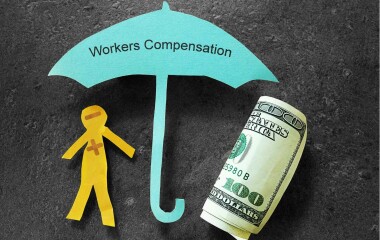
One of the most tragic events an employee can encounter in the workplace is undoubtedly a fatal occupational injury. This term refers to a short-term impact of external factors occurring during the performance of the employee’s work duties, resulting in the employee’s death. The death does not necessarily have to occur directly at the employer’s workplace — it may also happen later, for example, during the provision of medical care to the injured employee.
Fatal Occupational Injury: What Employees and Families Need to Know
In addition to the emotional loss suffered by the family and loved ones of the deceased, such an event also raises numerous legal questions regarding liability, compensation, and the rights of surviving relatives. This article aims to explain what constitutes a fatal occupational injury, the principles of work injury compensation, and the claims available to surviving family members.
What Is a Fatal Occupational Injury?
A fatal occupational injury refers to damage to an employee’s health that occurs while performing work duties or in direct connection with them and results in the employee’s death. It also includes cases where an employee dies from the consequences of a prior workplace injury. As mentioned earlier, this may also involve situations where the employee dies later as a result of complications originally caused by a work-related injury.
Employer’s Duties in the Event of a Fatal Occupational Injury
If a fatal occupational injury occurs in the workplace, the employer is required to:
-
Immediately report the incident to the relevant authorities (Police of the Czech Republic, Regional Labor Inspectorate, and the employee’s health insurance provider)
-
Secure the accident site for investigation
-
Conduct a thorough investigation into the cause and circumstances of the incident
-
Prepare an official injury report
-
Implement measures to prevent a similar incident from occurring
-
Review compliance with occupational health and safety regulations
Claims of the Injured Employee and the Surviving Relatives
Most of the claims an employee can receive in the case of a workplace injury fall under the category of non-pecuniary damage. These claims are personal rights of the injured employee. In principle, only the injured employee can claim them. If the employee dies, these claims expire unless they were asserted while the employee was still alive.
Recommendation:
If the employee is in critical condition, it is possible to assert their rights through a court-appointed guardian while the employee is still alive.
Legal Proceedings to Assert the Claims of a Dying Employee
To obtain compensation that rightfully belongs to an injured employee who is near death, surviving relatives must assert these claims through court while the employee is still alive. This requires appointing a legal guardian by the court and obtaining court permission to file a claim on the injured employee’s behalf.
If your family member has suffered a serious work-related injury, contact us as soon as possible to ensure you do not lose their entitlement. We help secure the maximum compensation available, even in such severe circumstances. If you act in time, the claim can be filed while the employee is still alive and you, as the heirs, can inherit the compensation due to the deceased employee.
Family Entitlements in Case of a Fatal Work Injury
Surviving family members of an employee who has suffered a fatal occupational injury are entitled to several types of compensation:
1. Lump-Sum Compensation for Survivors
This is granted to the surviving spouse, dependent children, and parents of the deceased. The amount is set by the Civil Code and the Labor Code and depends on the nature and quality of the family relationship with the deceased.
2. Reimbursement of Reasonable Funeral Costs
This includes funeral expenses, costs of a headstone or memorial plaque up to a specified amount, and travel costs related to the funeral.
3. Compensation for Loss of Maintenance
If the deceased was legally obligated to support someone (e.g., children, partner), the survivors are entitled to regular payments covering the loss of this support, for the time period that the support would have continued.
4. Compensation for Property Damage
This includes damage to the employee’s personal belongings that occurred in connection with the fatal injury.
Who Is Liable for a Fatal Occupational Injury?
The employer is primarily liable for compensating a fatal workplace injury. All employers are legally required to carry liability insurance for workplace injuries. The insurance company pays out compensation to survivors if it determines that a work-related injury occurred.
An employer can be fully or partially exempted from liability only in specific cases, such as:
-
The employee violated legal or safety regulations and was properly informed about them
-
The injury occurred under the influence of alcohol or drugs
-
The employee acted recklessly with awareness of the possible consequences
What to Do if a Family Member Suffers a Fatal Occupational Injury
Try to resolve the matter while the injured employee is still alive. If that’s not possible, follow these steps after the employee’s death:
-
Contact the employer and request a copy of the official injury report
-
Reach out to the employer’s insurance company to file a compensation claim
-
Consult a lawyer who specializes in labor law
-
Monitor the investigation by the Labor Inspectorate or the Police
-
Submit a compensation claim in time
Know Your Employee Rights
Have you lost a loved one due to a workplace injury? Don’t hesitate to contact us. We will help you understand your entitlements and claim all available compensation. Act promptly – certain claims expire if not made during the employee’s lifetime.
It’s crucial for survivors to know and actively assert their rights. At the same time, it must be emphasized that prevention is the best strategy — ensuring safe working conditions that minimize the risk of fatal injuries.
📞 Phone: +420 773 014 007
📧 Email: info@pravozamestnance.cz
🏢 Contact Form: [available on website]
Follow us on social media: Instagram, Facebook, LinkedIn
We protect and enforce employee rights. We strive to improve working conditions for employees in the Czech Republic. We are also your support when dealing with workplace injuries. For news, advice, and employee rights tips, visit our blog section or follow us on social media.
Thank you.